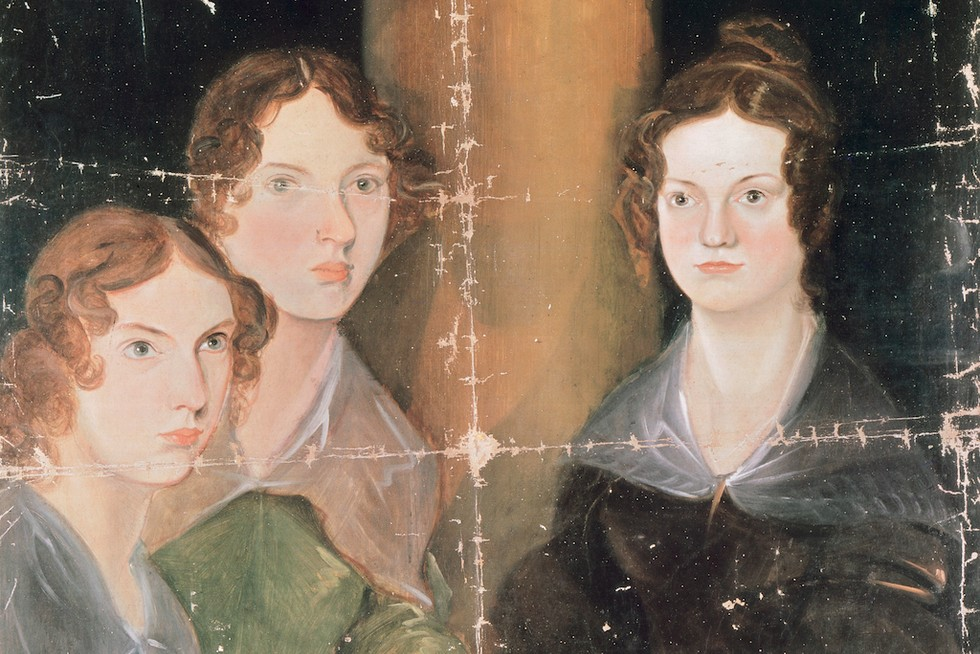
Who, What & Where: The Brontë Sisters
Some places leave their mark on people. Others shape them entirely — and in doing so, create stories, images and emotions that are never forgotten. For the Brontë sisters, Yorkshire — and the wild, weather-beaten moorland above the stunning village of Haworth — was not simply home.
They found the beating heart of those moors. And through their writing, they let it beat again — in every page, every sentence, every story they created. Stories that have never been forgotten, and never will be, by those who love Yorkshire and by those who come to discover it.
Born into the North
Charlotte (1816), Emily (1818) and Anne (1820) Brontë were born in Thornton, near Bradford, but it was Haworth that became their entire world. In 1820, their father Patrick Brontë was appointed vicar of Haworth, and the family moved into the Parsonage at the top of the village.
Here, with open moorland stretching endlessly beyond the churchyard — trees reaching for the sky and wind rolling in from the hills — they were free to discover themselves, their imaginations, and what truly mattered.
Tragically, their mother, Maria Brontë (née Branwell), died in 1821 at the age of just 38. She left behind six young children, and her loss would profoundly shape the family’s life. The two older sisters who arrived first, sadly, died very young, leaving the four remaining children. This was a time before modern medicine, and one cannot help but wonder what more might have been written had this remarkable family known longer, healthier lives. Grief, loss and fragility would later weave themselves into the darker, more desperate themes of the sisters’ novels.
Yet what remained was a close, fiercely creative household. Charlotte, Emily, Anne and their brother Branwell were raised among thick-bound books in the Parsonage library, their ideas forged during long walks across the rugged, heather-clad moors. That landscape — raw, untamed and unforgiving — would one day echo through some of the most powerful novels ever written.
Writing Against the Wind
As they grew, the sisters worked as governesses and teachers, roles that paid the bills but offered little joy. Writing was where their hearts truly lay. Pen nibs dipped in dark ink, paper spread before them — the words they formed would endure far beyond their own short lives.
In 1846, they published a collection of poetry under male pen names — Currer, Ellis and Acton Bell — a quiet but brave act of rebellion that opened the door to their novels.
Charlotte’s Jane Eyre gave the world a heroine who demanded dignity, independence and love on her own terms.
Emily’s Wuthering Heights was as fierce as the wind that lashes the heather high above Haworth — unsettling, unforgettable, and as wild as the moors themselves.
Anne’s The Tenant of Wildfell Hall was courageous and far ahead of its time, challenging ideas of marriage, morality and women’s freedom.
Though misunderstood at first, their novels would go on to change English literature forever.
Short Lives, Enduring Words
Their work has stood the test of time, but their lives were heartbreakingly brief.
Emily died in 1848, aged just 30.
Anne followed in 1849, aged 29, and is buried by the sea at Scarborough, where she sought rest in her final days — the sound of the waves forever entwined with her story.
Charlotte died in 1855, aged 38.
Emily and Charlotte are buried beneath St Michael and All Angels’ Church in Haworth, alongside their father and brother. Their final resting place lies only a few steps from the Parsonage where their stories were born.
Walking in Their Footsteps
Today, Haworth remains not just beautiful, but deeply atmospheric and mysterious — a village where the past feels incredibly close. The Brontë Parsonage Museum still looks out over the same moors the family once walked. They talked, laughed, argued and dreamed there. The paths the sisters knew remain windswept and wide, stretching into a landscape that has changed little in centuries.
To visit Haworth is to understand the Brontës not just as writers, but as children of this place — shaped by silence, shifting weather, stone and sky. Their voices still rise from the moors as surely as the wind, and Yorkshire is forever richer for it.
You can still buy their books from the shops lining the steep cobbled street they once walked. You can visit the church where their father preached. You can step inside the Parsonage and see where they wrote, ate, prayed and lived.
You do not need to know the history of the Brontë sisters to fall in love with their writing. Their novels sit on bookshelves across the world, continuing to move readers with their strength, passion and honesty.
To walk in the footsteps of the Brontës is to let your mind wander — to feel the wind and rain on the moors they knew so well. And perhaps, in the quiet whisper of grasses leaning in a summer breeze, you may feel the same spark of inspiration they once did. It is something that stays with you. Wherever you go next, you carry a unique part of Yorkshire with you.