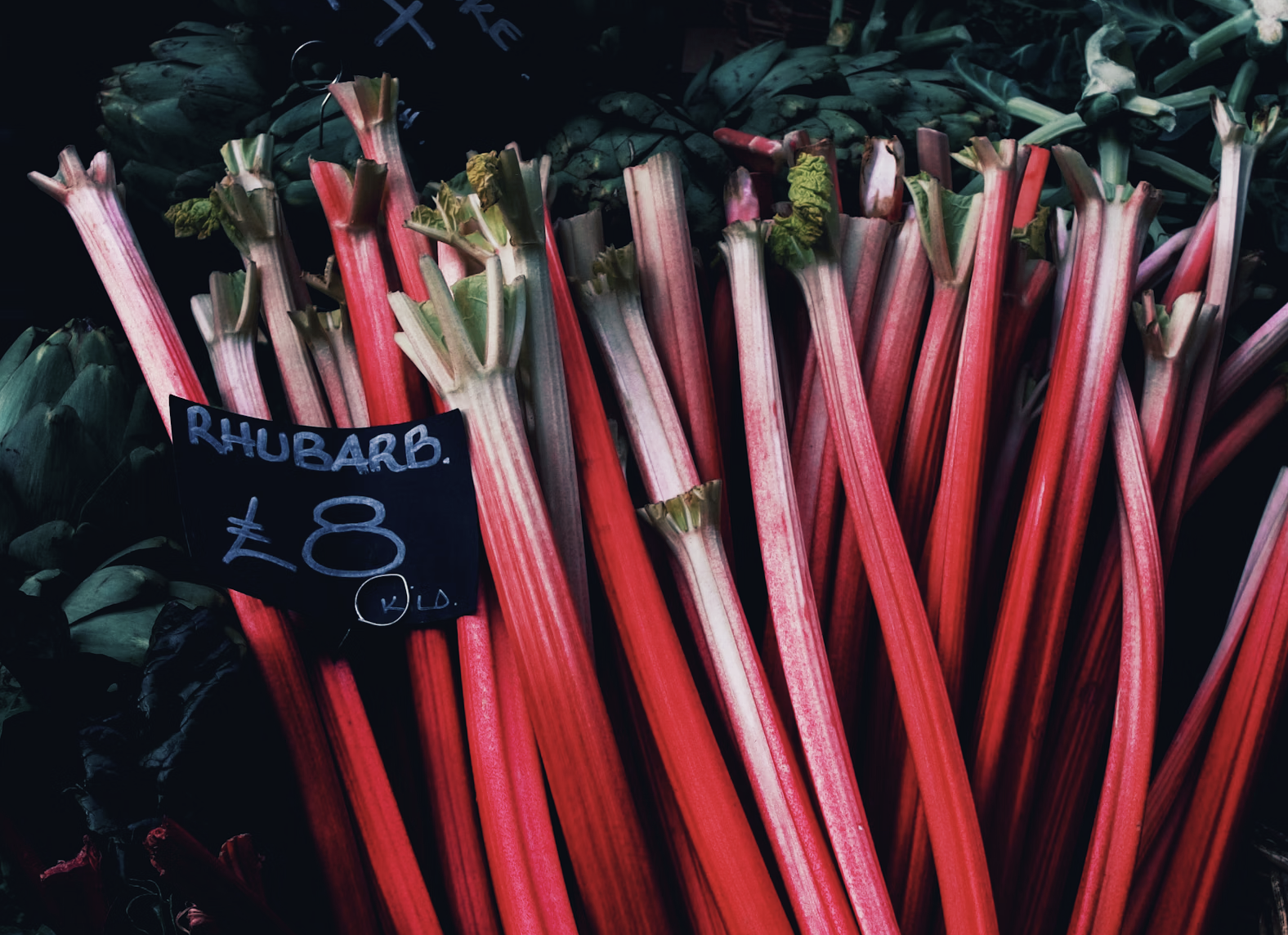
There are few things more ordinary than the humble rhubarb plant. Its green, pink and deep red stalks rise proudly from beneath the soil, hardy and dependable. Grown in gardens , fields and allotments across the world, rhubarb finds its way into everything from crumbles to gin, stewed and preserved, frozen and enjoyed year-round. To many, it’s just another item on a busy supermarket shelf.
And yet, here in Yorkshire — and especially in one small part of it — rhubarb is something else entirely.
I’m fortunate enough to live in a beautiful and rural part of the south-east of Leeds, firmly within the area known as the “Rhubarb Triangle.” This small but remarkable patch of land, stretching between Wakefield, Leeds and Morley, has been producing rhubarb in a way found nowhere else on earth for well over a century. Here, knowledge isn’t learned overnight — it’s passed down, quietly, from one generation to the next.
Here, rhubarb is not just grown. It is understood.
How the Rhubarb Triangle Began
Rhubarb arrived in Britain in the early 18th century, first grown for medicinal use. By the 1810s, Yorkshire farmers had begun cultivating it as a food crop, discovering that the region’s heavy, fertile soil and cold winters were just about perfect.
The real breakthrough came in the 1870s, when growers around Wakefield discovered that lifting rhubarb crowns after the hard frosts and placing them into dark sheds produced earlier, sweeter stalks. This method — later known as forcing — transformed rhubarb from a seasonal crop into an all year-round one.
By 1900, the Rhubarb Triangle was booming. Families such as the Oldroyds of Rothwell, George Mitchell of Morley, and the Stocks family near Wakefield were sending tonnes of rhubarb by steam train to London, Manchester and Birmingham. These overnight services became known as the famous “rhubarb trains”, delivering fresh stalks to the likes of Covent Garden by morning.
At its height in the 1930s, the Triangle supported over 200 growers, covering more than nine square miles of fertile and cultivated land.
Forcing Sheds and Candlelight
What truly sets Yorkshire rhubarb apart is the tradition of forcing — still practised today, including here in Rothwell, where historic sheds quietly remain.
After the first hard frosts of autumn, heavy rhubarb crowns are lifted from the fields and taken into long, dark sheds. Inside:
There is no daylight
Temperatures are kept just above freezing
And traditionally, the sheds are lit only by candlelight
In the darkness, the rhubarb grows quickly, producing stalks that are tender, vividly coloured and naturally sweeter. Old growers would say that they could hear the rhubarb itself growing — faint creaks and pops as the stalks stretched upwards in the silence and darkness.
Whether folklore or truth, anyone who has stood in a forcing shed knows the atmosphere: candlelight flickering, breath hanging in the air, the quiet sense that something living is happening all around you.
Quiet. Still. Very much alive.
Rhubarb in the Summer Fields
Forcing may have made Yorkshire famous, but summer rhubarb is just as important. From late spring onwards, fields across the Triangle fill with long rows of plants. Huge green leaves spread across the soil, sheltering insects and wildlife beneath from the rain and as if proving gods own umbrellas, while those thick stalks grow quietly below.
This outdoor rhubarb is sharper and stronger in flavour — perfect for cooking and preserving. It thrives on little more than good soil, time and respect. It is plain, honest farming, passed down through generations – each plant improves on the next.
What We Use Rhubarb For
Rhubarb has fed Yorkshire families for centuries and will continue to do so for many more.
Traditionally used in:
Crumbles, pies and tarts
Stewed rhubarb with custard
Jams and preserves
Chutneys and sauces
More recently, it’s found new life in:
Rhubarb gin and vodka
Cordials and syrups
Craft beers and, better still, an apple and rhubarb cider — especially on a hot summer’s day when an ice cold glass finds its way magically into your hand.
Growing Rhubarb at Home
Rhubarb is one of the most forgiving plants you can grow — perfect for anyone wanting a small taste of Yorkshire.
Top tips straight from the Rhubarb Triangle – where we know how to do it proper:
Plant crowns in rich and well-drained soil (a bit of well-rotted manure — ‘oss muck - as we would say which does wonders at its base and dug in before you pop the crown in t’ ole). The hole should be big enough to enable you to cover the top of the crown with a couple of inches of soil.
Give plants a decent amount of space; they grow big and often quite wide leaves and the space allows the rain to get in between. For some reason, I have always found that having 2-3 crowns or even more and together, gives a larger harvest. Not sure why – maybe they like each other’s companionship?
They do need plenty of water when producing stalks/leaves. Remember, fruit is heavily made up of water, so don’t let your rhubarb dry out too much in the summer. If it is going to be hot out there, apply the factor 50 to your own body first, before stepping out and then go water the plants. I personally prefer to do it first thing in the very early morning before the sun starts to heat up and the surrounding houses and their occupants awake from their slumber.
There is something completely magical about watering your garden in the ever-changing colours of the sunrise and before the sun itself makes an appearance. You get to feel a great degree of mental peace, as well as that which surrounds you as you are joined only by the incredible birdsong that lifts the soul. You can also water in the evening when the sun has dropped, and the heat has gone from the day. Less water will evaporate during these cooler parts of the day and in doing so, it gets quicker to the roots where it is needed. Never water when the sun is at its highest and hottest. You will damage your own plants and burn the leaves to an extent where it may never recover.
Avoid harvesting rhubarb in the first year – pull the stalks and leaves as you normally would and then go pop em on the compost heap. They tend to be bitter and trust me – year 2 and onwards – you will understand why I said this. Your rewards will start to come and be enjoyed a lot more in the following year.
Pull stalks gently rather than cutting. Put your hand right down to the base of the stalk, next to the crown, hold firmly and pull in the same direction that the stalk was growing. You may get the white part at the end, like a heel and that shows you did it right. It is a skill and one you will master.
Once established, a rhubarb plant can produce stalks for 10 years or more. With care, it will reward you year after year. Indeed, my mother has one that I swear is older than father time itself, but it still gives beautiful and sweet stalks each summer.
Why Rhubarb Matters in Yorkshire
Rhubarb isn’t flashy. It doesn’t shout. It doesn’t need to.
It reflects Yorkshire perfectly:
Quiet pride
Hard work
Doing things properly, even when no one’s watching
From the candlelit sheds of Rothwell to the fields around Wakefield and Morley, this humble plant has shaped livelihoods, fed families, and put Yorkshire on the map.
Some of the best things grow slowly, in the dark, with patience and care.
A True Taste of Yorkshire: Traditional Rhubarb Crumble
To finish, here’s a simple way for anyone, anywhere, to share a little Yorkshire magic.
Ingredients
500g rhubarb, chopped
100g sugar
1 tbsp water
Crumble
150g plain flour
75g cold butter, cubed
75g sugar
Optional handful of oats
Method – The Complicated Bit Where Ya Git Ya Hands a Bit Tacky!!
Heat oven to 180°C (350°F)
Place rhubarb, sugar and water in an ovenproof dish – those glass ones are best as you can see how much fruit and crumble you are putting in.
Rub butter into flour until breadcrumb-like
Stir in sugar (and oats if using)
Sprinkle generously over the rhubarb
Bake for 35–40 minutes until the rhubarb is golden and bubbling. Be careful as the fruit is extremely hot and you do not want to get scalded and the dish has just come from the oven which can lead to a nasty burn. Keep little hands away from the area please.
The final questions now are: Will I share it with anyone? Does anyone really deserve this stunning desert that I have made and who never offered assistance? Should I have one large spoon full on my plate or two? Maybe a tad more for luck?
And….. should I serve this with hot golden custard, or a large dollop of single or double cream, or even a nice spoon of ice or maybe just savour it as it is? To heck with it, be like us – have a bit of each! Whatever you choose, I guarantee you one thing……
“It’ll be reet grand”