St Mary’s Church, Lead (Towton) — A Historic Yorkshire Church Town
Just beyond the Crooked Billet Pub, outside the small village of Towton, North Yorkshire, set back from the road, rising quietly from an open and green pasture, stands a church that does not shout for attention. It doesn’t need to as it has seen more than its fair share of this throughout its very long life. St Mary’s Church at Lead has stood there for centuries, watching history pass by at its own gentle pace, its roots cast deep and intertwined into the rich but heavily bloodied Yorkshire earth.
This is a very small church - humble in size, its inner air, chilled and uninviting, hidden behind a large wooden entrance door. It is a church deeply honest in its purpose. It occupies consecrated ground that has known deep faith, fear, violence and endurance in their own equal measure. Its amazing story reaches well back over a thousand years, when the only method of transport was that on the back of a horse, hooves dirty from the wet and muddy tracks beneath its legs. Those same hoof marks were duly wiped away by the rain and our typical Yorkshire weather. As the centuries and history passed, that same soil would be again walked on by thousands of foot soldiers on their way to fight with swords, axes, pikes and more. Life for those who served the church and the future armies who walked those fields was hard and their belief was as essential and important as the bread that was baked and fed those in need.
A Church Older Than Memory
The church itself stands on the site of a medieval village called Lead (Pronounced and sounding as the soft and heavy metal). This was a settlement that has long since disappeared, its houses and the lives of those who inhabited these, absorbed back into the very fields and woods from where they originally came. What remains now of this part of important part of our Yorkshire history is this solitary church — built largely in the 14th century and probably was once part of a private chapel. It was maybe linked to a place called Lead Hall and the families who lived and worked there, within its estate and on its surrounding land.
It is a simple rectangular building made of true Yorkshire limestone, with a bellcote at the western end and a roof that has been repaired and renewed many times over the centuries. Huge timbers removed and taken away. Local trees felled and new beams cut, then by the pure strength of those men who believed and toiled, replaced and lifted back into their rightful positions. The wood shaped by what were simple and basic tools in comparison to those of the modern-day Britain. Inside, there is no grandeur – it is not needed. Instead, there are solid wooden pews, worn smooth by generations and generations of the bodies of those who came to worship in front of its alter. The farmers, labourers, women wrapped in woollen shawls , children fidgeting in heavy boots, all kneeling here with knees pressed hard against the harsh cold stone, prayed for forgiveness, salvation, peace and an end to the cold winters that brought heavy suffering and loss of life.
This was not a place for the powerful. It was a place for ordinary Yorkshire god fearing folk, dressed in basic clothes, made from homespun cloth, leather belts, rough cloaks and caps which fought to keep away the intense cold of the seasons. These people lived close to the land and even closer still to complete uncertainty.
Palm Sunday, 29th March 1461
On that single date in Yorkshire history, every single thing changed.
Within sight of those church walls took place the Battle of Towton, fought during the Wars of the Roses. This was an absolute brutal dynastic struggle between the House of York and the House of Lancaster (Yorkshire against Lancashire). On one side of the surrounding fields stood the Yorkists, fighting for Edward IV. On the other, the Lancastrians, loyal to King Henry VI and led in his absence by Margaret of Anjou. It is believed that many of the Yorkist troops visited the church and knelt in silent prayer before a crucifix and candle on the alter, before then marching off to war.
That Palm Sunday in 1461 dawned bitter and extremely bleak. The grey sky no longer held back the heavy snow in which it had hidden and whose gales blew its cold white content straight into the faces of the Lancastrian army. The stiff wind for certain gave the Yorkist longbowmen a deadly advantage before a single foot marched forward into the battle. The arrows from the archers were duly pointed skyward at the correct and learned angle from many hours of training and in doing so, (following shrill orders shouted from deep within the army ranks), ice cold hands in unison released their deadly and pointed cargo.
Into the icy air thousands of arrows rose wave after wave, which were then picked up by the strong tailwind from behind. After climbing, they levelled out and as they quickly ran out of momentum and speed- the weight of their heavy and sharpened metal arrowheads allowed them to fall thick and fast. These found their target and pierced deep into the hearts and bodies of those fighting men below. Hundreds of thousands of arrows were launched during this individual battle and intertwined with the heavy snowflakes, they eventually found their intended marks. Men from both sides fought that day with longbows, bills, swords, poleaxes, knives and spears, hacking and pushing forward in the most brutal and appalling conditions.
By the end of the day, it is believed that as many as 28,000 individual men from both the Yorkist and Lancastrian armies lay dead in the surrounding fields just up and away from the church. A great amount of those critically wounded made their way as best they could to safely, only to then die in the deep and still falling snow. This put the small village of Towton onto the UK map and making its name as forever known as the place where the largest and bloodiest ever battle fought on English soil, took place.
As the Lancastrians broke away and fled, many were cut down or driven into the flowing Cock Beck, which ran from the battlefield and all the way past the beautiful church from where many men had previously prayed. Legend and chroniclers alike tell of those crystal-clear icy waters running a deep crimson red, now stained with the blood of thousands. As they tried to flee, they were hampered by the drifting snow and the howling icy wind. Clothes torn by battle or from the brambles in the hedgerows made things even worse. Wounds and injuries that had cut so deep into the bodies of those soldiers - now slowed them even more. Crossing that icy beck for some that were able, ultimately led to freedom, but tragically and for an immense amount of others, this was to become a single step too far. As they struggled to walk and move in the ice cold water, feet and legs became numb. Holding weapons in hand to try steady themselves, it was too easy for their feet to slip on the rocks hidden in its depths. In their blind panic to get away and keep moving, heavy armour dragged the rest of them under the cold water and in doing so, their screams were carried into the howling wind and will never be heard again.
It Is A Place of Shelter, Quiet Prayer & Reflection
St Mary’s Church stands close enough to the battlefield that it is impossible to believe it was untouched by those events. It may have become not just a place of silent prayer, but one of sanctuary. The church does not boast of this history amongst its walls. It wants to hold onto it quietly and respectfully – held in its very soul.
Ledger stones are set into the floor and now mark the resting places of local families — names now worn away by the footsteps of those who have visited over the centuries and are half-forgotten. The very ground itself remembers more than any inscription can or will. This is consecrated land that has known immense grief as well as love and devotion.
Nearby, at All Saints’ Church in the village of Saxton, lies Lord Dacre, a Lancastrian noble gentleman who was killed during the afore mentioned battle. Together, both of these beautiful churches form part of a sacred landscape that were all shaped by one single terrible day in history.
Standing Here Today
If you are visiting from overseas, drawn by England’s deeper history rather than its postcards, this church is a place that rewards your patience.
There are no crowds here struggling to view this little bit of Yorkshire history. There are no entrance fees to pay to step inside and through the huge stunning heavy wooden door. Inside these buildings, you will find no interpretation boards shouting for your undivided attention.
You now reach St Mary’s by driving on narrow Yorkshire roads and walking the public footpaths. You can park your car in a lay by up from the Crooked Billet pub a few minutes away, then crossing open fields where sheep now graze on ground once churned by armoured feet. Or first enjoy a meal and a pint, then walk off those calories by going straight over the road from the pub entrance, look at the very beck that still flows. The blood thankfully long gone from the battles fought upstream but I feel, traces of this must still be in the souls of the plants that line the edge.
Step inside and pause. Let your eyes adjust. The air is cool, still, and heavy with time. The pews creak softly. The stone holds the quiet. Faith mattered to those who worshipped because life many years ago was uncertain.
Some visitors say the place feels watched. Not in fear — but in memory. The ghosts here do not wail or wander. They stand. They endure. They remember.
A Church Now Saved by Walkers
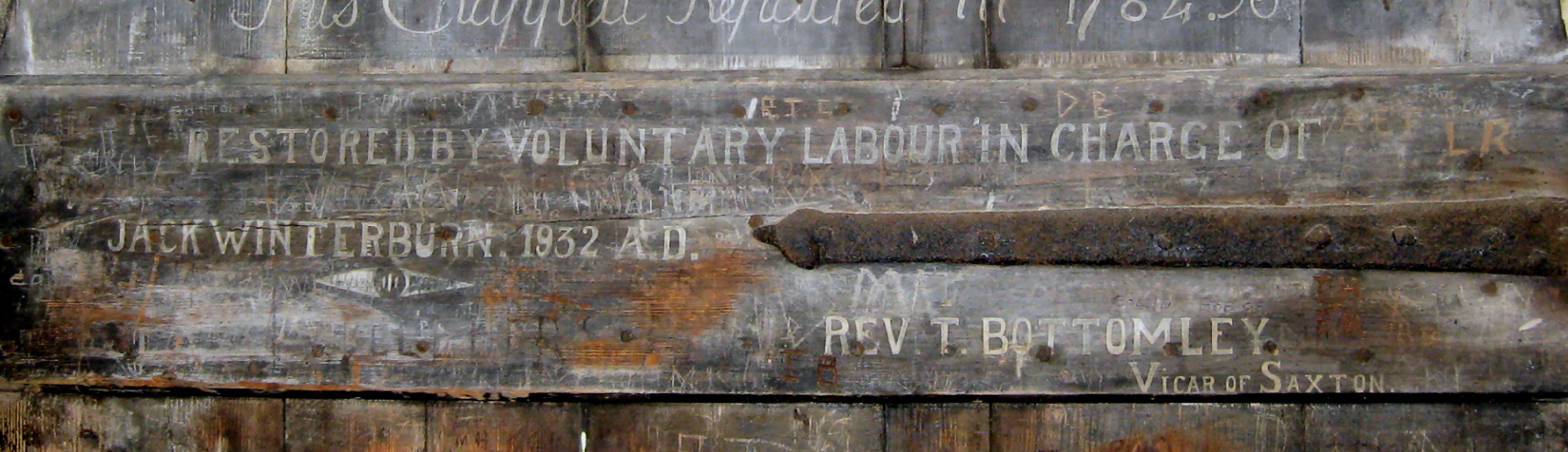
By the early 20th century, St Mary’s had fallen into disuse and decay. It might easily have been lost. Instead, in 1931, a group of ramblers and walkers restored the church, earning it the affectionate name “The Ramblers’ Church.” Their names are recorded on the door — a reminder that this place has survived because people cared enough to protect it.
Today, it belongs to the Church of England and remains consecrated, though services are extremely rare. It exists now as a place of reflection, memory, and quiet beauty and of battles long gone.
The Seasonal Guide
Each season changes the church’s character.
Spring brings lambs, birdsong, and wildflowers edging the paths.
Summer lights the limestone with a soft, golden glow beneath wide Yorkshire skies.
Autumn wraps the fields in rust and gold, the church standing firm against the lowering light.
Winter strips everything back to the bare bones— frost on stone, wind teases through the long grass — and the place feels closest to its past, solemn and unflinching.
Visiting St Mary’s Church, Lead
Location: Opposite the Crooked Billet Inn, near Towton, North Yorkshire
Access: On foot via public footpaths; limited roadside parking nearby
Church Type: Medieval Church of England chapel
Dedication: St Mary
What3Words location: ///verify.exact.location.before.publishing
Come with good boots on your feet. Come quietly and respectfully. Sit for a while.
Some places explain history. Others do a lot more and in its silence, they let you feel it.
St Mary’s Church at Lead does not ask for your attention — but if you give it time, it and its history will stay with you long after you have left its cold and sacred walls.